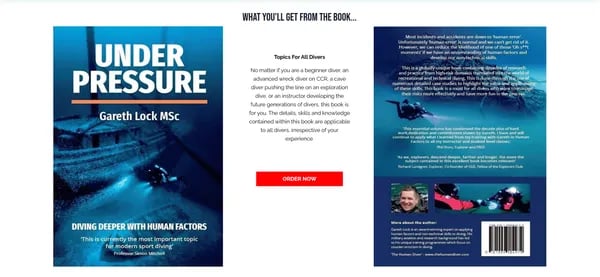


Picture this: You’re prepping for what’s supposed to be an easy Saturday morning dive. Your gear’s pristine, checklist complete. Yet, it’s a subtle miscommunication, not a malfunction, that almost sends things sideways. Gareth Lock’s "Under Pressure" hits home precisely because it doesn’t treat expertly maintained equipment as the endgame of diving safety—it fixes its gaze on the real wild card: humans. What makes this book fascinating (and borderline subversive) is how it exposes the overlooked everyday habits, team quirks, and decision-making under duress that really shape what happens below the surface. Forget textbook theory for a second—this is about diving’s messy, human reality, explored through gripping stories and surprisingly practical lessons. Let’s dive in.
Why Gear Isn’t Enough: Human Factors Overlooked
For decades, the diving community has placed its trust in equipment checks, technical training, and adherence to decompression tables as the backbone of Diving Safety and Performance. Yet, as Gareth Lock’s acclaimed book Under Pressure: Diving Deeper with Human Factors reveals, even the most advanced gear and perfect pre-dive routines cannot guarantee safety. The missing piece? The human factor—those subtle, often-overlooked behaviors and decisions that can make or break a dive.
Lock, drawing from his background as a military aviator and advanced trimix/CCR diver, challenges the gear-centered mindset by spotlighting real-world Case Studies on Diving Incidents. In over 30 detailed examples, he shows that most accidents do not result from catastrophic equipment failure. Instead, they stem from a series of minor procedural missteps, ingrained habits, or unclear leadership. As Lock puts it,
“Diving accidents seldom just ‘happen’ but result from complex minor deviations and human habits.”
This perspective is echoed by industry experts. Michael Menduno (M2) states,
“Every one of us makes mistakes every day, even the experts.”
The book draws powerful parallels to high-reliability fields like aviation, nuclear power, and medicine, where human error is recognized as a constant. In these industries, safety is not just about having the right tools, but about building systems that anticipate and learn from human mistakes.
Consider a simple scenario from Lock’s case studies: a dive buddy forgets to give a pre-dive signal. The gear is flawless, the plan is solid, but a moment of miscommunication nearly leads to a serious problem. This is the “human factor” in action—proof that even small lapses can have outsized consequences underwater.
Gear checks are essential—but not a cure-all for risk. Even with perfect equipment, human behaviors like complacency or distraction can introduce danger.
Small procedural missteps, poor habits, or unclear leadership often cause incidents. These are rarely caught by checklists alone.
Error is universal—even for experts. Lock’s research and the voices of contributors like Mark Powell and Richie Kohler reinforce that mistakes are inevitable, but learning from them is what matters.
Systems thinking is key. As Lock and his contributors argue, diving safety is a system—gear, people, environment, and culture all interact. Focusing only on equipment ignores the bigger picture.
Lock’s approach, rooted in both academic research and practical experience, demonstrates that Human Factors in Diving must be addressed alongside technical skills. Under Pressure provides frameworks and tools for divers to recognize, discuss, and learn from human error—moving the community beyond blame and toward a culture of open reporting and continuous improvement. As the book’s case studies show, technical compliance is not enough; true safety comes from understanding and managing the messy reality of human behavior beneath the surface.
Just Culture: Why Owning Mistakes Saves Lives
In the diving community, mistakes are often hidden or downplayed, driven by fear of blame or embarrassment. Gareth Lock’s “Under Pressure: Diving Deeper with Human Factors” challenges this culture, advocating for a transformative shift toward a Just Culture in Diving Community. This approach, inspired by aviation and other high-risk industries, replaces punishment with openness, learning, and shared responsibility.
From Blame to Learning: The Core of Just Culture
Lock argues that errors are not just inevitable—they are universal, affecting divers of every skill level. Instead of asking, “Who is at fault?” a Just Culture asks, “What can we learn?” This mindset is crucial for Diving Accident Prevention Strategies. By destigmatizing error, divers are encouraged to report incidents and near-misses, which in turn helps the entire community grow safer and more resilient.
‘Just Culture’ destigmatizes error and fosters systemic learning, just as in aviation.” – Gareth Lock
Case Review: Turning Mistakes into Team Learning
Lock’s book is filled with real-world stories where honesty after a mistake led to powerful team learning. In one case, a diver admitted to a navigation blunder during a post-dive debrief. Instead of facing criticism, the team used the moment to analyze what went wrong, discuss contributing factors, and identify practical changes for future dives. This open review prevented similar errors and strengthened group trust—a clear example of Learning from Failure in Diving.
Peer-Driven Learning: The Power of Community Platforms
A key element in building a Just Culture is the creation of safe spaces for sharing. The Under Pressure community forum, available to book purchasers, exemplifies this. Divers from around the world use the platform to share stories, ask questions, and offer peer support. These open reporting platforms are modeled after systems in aviation and healthcare, where collective improvement is prioritized over individual blame. This peer-driven learning environment is essential for reducing repeat mistakes and advancing diving safety.
Openness over secrecy: Mistakes are discussed, not hidden.
Systemic learning: Patterns are identified and addressed at the community level.
Support, not shame: Divers support each other through honest dialogue.
Tools and Frameworks for Change
Lock doesn’t just highlight the need for change—he provides practical frameworks for incident reporting, debriefing, and learning reviews. These tools make it easier for divers and instructors to integrate Just Culture principles into daily practice, ensuring that lessons from mistakes are captured and shared.
“Under Pressure” is available in print, digital, and audio formats, making these essential lessons accessible to all. By fostering a Just Culture, the diving community can move beyond checklists and equipment, embedding safety deep into its collective mindset.
Non-Technical Skills: The Soft Side of Staying Alive
When it comes to diving safety, most training focuses on technical know-how—gas management, equipment checks, and decompression theory. But as Gareth Lock’s Under Pressure: Diving Deeper with Human Factors reveals, it’s the Non-Technical Skills for Divers—communication, leadership, mindset, and teamwork—that often determine whether a dive ends in success or disaster. These “soft skills” are not just nice-to-haves; they are critical life-saving tools, as vital as any regulator or dive plan.
Communication: The Lifeline Underwater
Lock’s case studies, featuring insights from renowned divers like Jill Heinerth and Steve Lewis, repeatedly show that clear, calm communication can turn the tide in emergencies. In one real-world scenario, a diver’s ability to calmly signal and share information prevented a teammate’s task overload from spiraling into a full-blown crisis. Underwater, where words are replaced by hand signals and body language, every gesture counts. Practicing these skills above water, as Lock suggests, ensures that divers can communicate effectively when it matters most.
Teamwork and Leadership: Building Trust Below the Surface
Diving is rarely a solo pursuit. Effective Teamwork and Leadership are the backbone of safe dive operations. Lock emphasizes that high-performance teams are built on trust, role clarity, and mutual accountability. As Jill Heinerth puts it:
"High-performance rests on trust, leadership, and mutual accountability."
When leadership is weak or roles are unclear, teams are more vulnerable to errors and miscommunication. Lock’s book provides practical frameworks for building these skills, including pre-dive briefings, role assignments, and debriefs that foster open dialogue and learning.
Mindset and Decision-Making: Staying Aware, Staying Alive
A diver’s mindset—staying calm, curious, and self-aware—directly impacts Decision-Making and Situational Awareness. Lock introduces practical tools like the “What? So What? Now What?” method, which helps divers pause, assess, and respond thoughtfully to changing situations. This approach is designed to prevent “task fixation,” where focus narrows and critical cues are missed, sometimes with fatal results.
Practical Exercises: Turning Theory Into Habit
What sets Under Pressure apart is its focus on actionable learning. Each chapter includes exercises and reflective prompts, encouraging divers to practice non-technical skills in real-world settings. For example:
Role-playing communication breakdowns and recoveries
Team debriefs to analyze what went well and what could improve
Mindset check-ins before, during, and after dives
These exercises help divers internalize soft skills, making them second nature when stress levels rise.
Lock’s message is clear: Non-technical skills are not optional extras—they are essential for every diver, instructor, and team leader. By prioritizing communication, leadership, and situational awareness, divers can prevent everything from minor mishaps to major tragedies, making the underwater world safer for all.
Failure Isn’t Fatal: Learning Instead of Repeating
In Under Pressure: Diving Deeper with Human Factors, Gareth Lock redefines failure in diving—not as a mark of incompetence, but as a powerful classroom for growth. The book’s core message is clear: Learning from Failure in Diving is not only possible, but essential. Lock and his contributors argue that mistakes, near-misses, and even accidents are inevitable in complex environments. What matters most is how divers, instructors, and agencies respond to these moments.
Lock’s approach is rooted in the concept of a “Just Culture,” which replaces blame and shame with open discussion and honest assessment. This shift is critical for Diving Accident Prevention Strategies. By analyzing real-world incidents—such as a diver’s botched ascent or a miscommunication during a cave dive—the book demonstrates that every error holds lessons for individuals and teams alike. As Roger Williams puts it:
"Mistakes are the seeds of safer diving, if we have the courage to learn from them."
Lock’s methodical inclusion of failure stories, not just success tales, normalizes the conversation around error. He provides practical tools like the “20:20 hindsight” exercise and structured learning reviews, which guide divers through post-incident reflection. These exercises help divers and teams move beyond simple fault-finding, encouraging them to ask:
What happened?
So what does it mean for our team and procedures?
Now what can we change to prevent recurrence?
This approach empowers every diver to evolve. Instead of repeating mistakes, teams build resilience—adapting their habits, communication, and decision-making. Organizational learning and debriefing, as promoted in the book, are proven Training Resources for Diving Instructors. Instructors are encouraged to integrate these reviews into their curriculum, using both the book and the online Under Pressure community as resources for peer-driven learning and honest dialogue.
The impact of this philosophy is far-reaching. Agencies and training organizations are urged to adopt Lock’s failure review process, not only to improve individual skills but to strengthen the entire system. Bulk instructor training solutions are available, making it easier for organizations to embed these practices into their programs. By sharing and dissecting failure stories, the diving world moves toward a culture where safety is built on reflection, not perfection.
Lock’s work stands out for making failure reviews accessible and actionable. He shows that discussing errors—whether a minor oversight or a major incident—should be a routine part of every diver’s journey. In doing so, Under Pressure transforms failure from a hidden shame into the foundation of safer, smarter diving for all.
More Than a Book: Building a Bigger, Better Dive Community
“Under Pressure: Diving Deeper with Human Factors” by Gareth Lock is not just a book—it is a catalyst for a new kind of diving community membership. While many diving resources stop at technical checklists or equipment reviews, Lock’s work pushes the boundaries, inviting readers to become part of a global, collaborative network focused on human factors in diving. This approach transforms the act of reading into an ongoing, peer-driven learning process that extends far beyond the last page.
A unique feature of the Gareth Lock book is its built-in access to the exclusive “Under Pressure” online forum. Every purchase—whether in signed print, eBook, audio, or even the Polish edition—comes with membership to this dedicated space. Here, divers of all backgrounds and experience levels can share stories, discuss lessons learned, and ask questions in a supportive environment. This continuous exchange of real-world experiences means learning never stops, and the community itself becomes a living resource for safety and growth.
This model of community learning is what sets “Under Pressure” apart from other safety and survival texts. While it has been compared to classics like “Deep Survival” and “Blueprint for Survival,” Lock’s book is praised for its unique focus on non-technical, or “soft,” skills—areas often overlooked in traditional dive training. As Phil Short notes,
“Under Pressure broadens the safety conversation to non-technical, ‘soft’ skills and community learning.”
This shift is crucial, as it recognizes that diving safety is not just about following procedures, but about understanding the human side of risk, decision-making, and teamwork.
Accessibility is another cornerstone of the book’s impact. With formats ranging from signed print editions to digital and audio versions, and even a Polish translation, “Under Pressure” ensures that divers everywhere can access its insights. The book is priced at £30.00 in the UK and £45.00 internationally, making it an affordable investment in personal and community safety. Instructors and dive agencies can also take advantage of bulk and training options, further spreading the message of human factors in diving.
Ultimately, “Under Pressure” has become more than a reference—it is a hub for ongoing education and connection. The diving community membership that comes with the book is a gateway to a peer-driven network where learning is continuous and collective. By making its tools, frameworks, and stories available in multiple formats and languages, and by fostering a culture of open dialogue, Gareth Lock’s book is helping to build a bigger, better, and safer dive community—one that learns together, grows together, and supports every diver, everywhere.