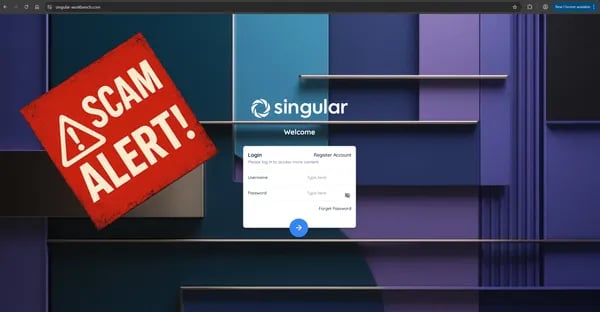



Imagine scrolling through your social media one afternoon when a message pops up promising easy money for simply liking videos or optimizing data online. It sounds too good to be true — and often, it is. Task scams like the one involving singularbench.com are tricking thousands, using slick platforms and cryptocurrency traps to steal serious cash. This post takes you inside the scam’s web, sharing what to watch for and how victims are fighting back.
Behind the Curtain: What Is the Singular Bench Task Scam?
The Singular Bench Task Scam is a modern twist on classic task scams and online job scams, targeting people searching for easy ways to earn money online. This scheme, also known as a task optimization scam, preys on job seekers by promising simple, high-paying online tasks—like liking videos, placing fake orders, or writing short reviews. But beneath the surface, it’s a sophisticated con designed to steal funds through staged trust-building and cryptocurrency payments scams.
How the Scam Starts: Unsolicited Messages and Social Media
Scammers initiate contact through unsolicited texts, WhatsApp, Telegram, or even social media DMs. Victims receive messages about “part-time” or “remote” jobs that require little effort and no experience. These communications often come from unknown numbers or profiles, sometimes using names like “Christine Lakes” or generic job recruiter titles. The use of scam communication WhatsApp numbers is especially common, with multiple reports of active scam numbers circulating in the wild.
Step-by-Step Manipulation: From Simple Tasks to Big Losses
Initial Tasks: Victims are directed to slick-looking websites or apps, such as
singularbench.comorsingular-behind.cc. Here, they’re given trivial assignments—optimizing data, writing reviews, or “liking” content. These platforms simulate account balances that grow with each completed task.Small Payouts: To build trust, the scam allows a small withdrawal—usually between $300 and $500. This “payout” convinces victims the platform is legitimate and encourages them to continue.
Deposit Demands: The scam escalates when victims are told they must deposit their own money to unlock higher earnings, resolve fake negative balances, or access “VIP” tasks. These deposits are often requested via cryptocurrency payments, making the funds nearly impossible to recover.
Endless Excuses: Once a victim deposits money, scammers invent new fees—like fake taxes or “excess product” charges—to extract even more. The cycle continues until the victim can no longer pay or realizes the fraud.
Red Flags and Real-World Impact
According to the FTC and FBI, warning signs of these employment scams include:
Unsolicited job offers via text or social media
Requests for upfront payments or deposits
Demands for cryptocurrency payments
Vague job descriptions and undefined responsibilities
Pressure tactics and manufactured urgency
“These scams are designed to appear real through gamification and fake payouts, tricking users into investing more.” – Cybersecurity Analyst
Victims report devastating losses—sometimes exceeding $12,000 in a single case—after being lured by convincing platforms and professional-looking customer service. The scam’s network spans multiple domains and uses a variety of scam communication WhatsApp numbers to reach new targets. The illusion of legitimacy is maintained through simulated earnings, staged withdrawals, and even AI-generated “proof” of payments.
Ultimately, the Singular Bench Task Scam is a cautionary tale about the dangers of task scams and cryptocurrency payments scams in today’s digital job market.
Warning Signs and Psychological Tricks Used by Scammers
The “singular bench task scam” is a textbook example of how modern online job scams operate, blending classic warning signs with sophisticated psychological tactics. Understanding these job scam warning signs and the psychological tricks scammers use is crucial for anyone seeking online work.
Unsolicited Job Offers with Unrealistic Promises
Scammers typically initiate contact through unsolicited messages on platforms like WhatsApp, Telegram, or text, offering easy, high-paying “part-time” jobs. These offers often promise quick money for simple online tasks—such as liking videos or writing reviews—requiring little to no experience. According to the FTC, “If a job is asking you to pay money first, it’s not a real opportunity—it’s a scam.” Genuine employers rarely recruit this way or guarantee high pay for minimal effort.
Pressure to Deposit Money to Unlock Earnings
One of the clearest job scam warning signs is the demand for upfront payments. Victims are told they must deposit money to unlock higher earnings, resolve fake tax issues, or cover “VIP fees.” The scam escalates as the required deposits increase—one report cited an initial $12,000 deposit, followed by a demand for $21,000 more to access supposed commissions. These invented charges are designed to keep victims on the hook, draining their finances with each new excuse.
Requests for Cryptocurrency Payments
Another major red flag is the requirement to pay exclusively in cryptocurrency. Cryptocurrency payments scams are especially dangerous because crypto transactions are difficult to trace and nearly impossible to reverse. Scammers exploit this by insisting on crypto for deposits, taxes, or “withdrawal fees,” knowing victims have little recourse once the money is sent.
Gamification Elements to Maintain Engagement
To keep victims engaged, scammers use gamification tactics—such as bonuses, streaks, and simulated account balances. Victims may see their “earnings” grow on a fake dashboard and are sometimes allowed a small withdrawal at first. This creates a false sense of legitimacy and encourages larger investments. The platforms mimic legitimate apps, complete with professional-looking customer service and fake documentation.
Psychological Tactics: Urgency, Trust, and Repeated Communication
Scammers are skilled at exploiting psychology. They manufacture urgency by claiming limited-time offers or threatening account suspension if deposits aren’t made quickly. Repeated messages and “customer support” chats foster a sense of trust and pressure victims to comply. The use of AI-generated video evidence and professional documentation further convinces victims they are dealing with a real company.
Unsolicited job offers with promises of high pay for little work
Pressure to deposit money to unlock earnings or resolve fake tax issues
Requests for payments exclusively in cryptocurrency
Gamification elements like bonuses and streaks to maintain engagement
Manufactured urgency and repeated communication to increase compliance
As the FBI and FTC warn, genuine employers do not require upfront fees, cryptocurrency payments, or personal deposits to access earnings. Recognizing these psychological tactics scams use is the first step in protecting yourself from sophisticated online frauds.
Singularbench.com and Related Sites Under the Microscope
When it comes to fraudulent online job platforms, singularbench.com stands out as a textbook example of how scammers use slick design and fake trust signals to lure victims. According to Scamadviser reviews of singularbench.com, the site carries a devastatingly low Trustscore of 1 out of 100 as of November 2025. This score is not arbitrary—Scamadviser’s algorithms analyze a range of technical and behavioral signals, including domain age, hosting context, source code, and user reviews. The findings paint a clear picture: singularbench.com is riddled with red flags that strongly correlate with scam activity.
Technical Red Flags: Low Trust Scores and Suspicious Hosting
One of the most telling signs of a scam website is its trust score. Singularbench.com’s 1/100 Trustscore is a direct result of several technical issues:
Low Tranco traffic rank: The site receives minimal legitimate traffic, a common trait among scam operations that pop up and disappear quickly.
Shared hosting with other suspicious domains: Scamadviser’s analysis reveals that singularbench.com is hosted on servers known to support other low-trust or scam websites.
Young domain age: Newly registered domains are a hallmark of fraudulent online job platforms, as scammers frequently abandon sites after negative exposure.
Registrar associations: The domain is registered through services often linked to scam operations, further eroding its credibility.
SSL Certificates: A False Sense of Security
While singularbench.com features an SSL certificate and a professional-looking layout, these elements are now easily faked. As cybersecurity experts note, “Scamadviser’s low scores and associations with known scam infrastructure tell a clear story.” An SSL certificate only ensures encrypted communication—it does not guarantee that a site is legitimate or safe. Scammers routinely use SSL to create a false sense of trust.
Network of Related Scam Domains
Singularbench.com is not operating in isolation. Investigations have uncovered a web of related domains, including:
singulardatadrive.net
singularbench.com
singulardatabench.com
singular-behind.cc
singular-workbench.com
singularcreate.com
These sites share similar branding, layouts, and scam tactics, often using WhatsApp and Telegram for communication. Several phone numbers remain active, such as +1 (646) 914-0653 and +49 1521 016 7702, as of late 2025.
Included (WhatsApp) communication/phone numbers:
- +1 (774) 365-8842 (Not Active Anymore)
- +1 (646) 914-0653 (Christine Lakes – Still Active Per 28/11/25)
- +1 (737) 395-2325 (Not Active Anymore)
- +44 7455 065328 (Still Active Per 6/6/25)
- +1 (413) 645-2911 (Not Active Anymore)
- +44 7537 918796 (Not Active Anymore)
- +49 1521 016 7702 (Still Active Per 28/11/25, but very slow response)
Help Us Keep the Community Safe
If you come across any suspicious web addresses, WhatsApp chat numbers, or groups that might be scams, please report them to us. Your help ensures a safer online experience for everyone. Thank you for supporting our community!
Victim Reports and Community Warnings
User testimonies on Reddit and scam forums reinforce the technical findings. Victims describe losing thousands of dollars after being enticed by small initial payouts, only to face escalating deposit demands and fake “tax” or “VIP” fees. The platforms simulate growing balances and even provide AI-generated video “evidence” to maintain the illusion of legitimacy.
These patterns—low trust scores, technical warning signs, and consistent victim experiences—underscore the importance of verifying any online job offer through independent sources like Scamadviser before engaging.
Victim Stories and the Harsh Reality of Recovering Lost Funds
The singular bench task scam and its related deposit money scams have left a trail of financial devastation, with victims sharing their experiences across forums like Reddit’s r/Scams and scam reporting sites. These scam victim experiences task scams reveal a sophisticated operation that preys on trust, hope, and the desire for easy online income.
Initial Rewards, Escalating Losses
Many victims describe a familiar pattern: after responding to an unsolicited job offer via WhatsApp or Telegram, they are guided to a professional-looking website—such as singularbench.com or singular-behind.cc. The onboarding process is friendly and convincing, often featuring AI-generated video evidence and responsive customer support. Victims are assigned simple “task optimization” jobs, like liking videos or writing reviews, and are shown a growing account balance.
To build trust, scammers allow a small withdrawal—sometimes $300 to $500—making the platform seem legitimate. As one user, StatisticianOk6214, reported:
“I was fooled by the platform’s slick interface and even saw a withdrawal, but it was all fake.”
Encouraged by this initial payout, victims are then pressured to deposit larger sums, often under the guise of unlocking higher commissions or resolving fake negative balances. One customer inquiry highlighted a $12,000 deposit, followed by a demand for an additional $21,000 to access supposed earnings. Another victim lost $16,000 before realizing the scam’s true nature.
Psychological Manipulation and Escalating Demands
Fake Tax Requirements: Victims are told they must pay taxes before withdrawing funds.
‘Excess Product’ Fees: Invented charges appear just as victims attempt to cash out.
VIP Status Charges: Scammers claim only VIP members can access larger withdrawals, requiring further payment.
These tactics are designed to keep victims engaged and hopeful, prolonging the scam and maximizing losses. The use of AI for fake evidence, slick documentation, and psychological pressure creates a convincing illusion of legitimacy.
The Harsh Reality of Recovering Lost Funds Scams
When victims realize they’ve been scammed, the path to recovering lost funds scams is fraught with obstacles. Most deposits are made via cryptocurrency, which is nearly impossible to trace or reverse. Scammers quickly disappear or stop responding, and the platforms themselves are often short-lived, vanishing after a surge of negative reviews.
Attempts to seek help often end in frustration:
Victims report threats or silence when demanding refunds.
Official recourse is limited, as law enforcement can rarely track crypto transactions.
Scam websites and contacts frequently vanish or change identities.
As one reviewer shared, “I tried everything to get my money back, but the crypto was gone and the support chat just stopped replying.”
These task optimization scam stories underscore the ruthless efficiency of modern online fraud. The combination of psychological manipulation, professional presentation, and untraceable payments leaves victims with little hope of recovery—highlighting the urgent need for vigilance and public awareness.
How to Stay Safe: Scam Prevention and Reporting Advice
The rise of online task scams like the "singular bench task scam" highlights the urgent need for effective scam prevention tips and vigilant reporting. These schemes prey on individuals seeking flexible online work, luring them with promises of easy money and then manipulating them into making deposits that are never returned. Staying safe in this digital landscape requires a blend of skepticism, research, and proactive community action.
First and foremost, never engage with unsolicited job offers—especially those that arrive via text, WhatsApp, Telegram, or social media. Genuine employers rarely reach out through these channels, and they never require you to pay deposits, buy equipment, or send cryptocurrency to unlock your own earnings. If a job offer asks for money upfront or pressures you to act quickly, it’s a major job scam warning sign.
Before considering any online job, verify the legitimacy of the platform. Use trusted review sites like Scamadviser or Gridinsoft to check for red flags, such as low trust scores, recent domain registration, or negative user reviews. Take the time to search for the company name along with keywords like “scam” or “review.” If you find complaints or warnings from other users, steer clear. As research shows, verification and skepticism are proven ways to reduce scam victimization.
If you encounter a suspicious website, phone number, or social media contact, report it immediately. The scam reporting FTC portal at ReportFraud.ftc.gov and the FBI’s Internet Crime Complaint Center (IC3) are the best places to alert authorities. Your report not only helps protect you but also aids in mapping and shutting down scam networks. As public awareness grows, scammers lose their ability to operate in the shadows.
Education is a powerful shield. Stay informed about the latest scam tactics, such as simulated account balances, fake customer service chats, and psychological tricks like manufactured urgency. Share your knowledge with friends, family, and online communities. As one Consumer Protection Specialist put it,
“Community vigilance is our best defense against these evolving scams.”
When individuals report suspicious activity and warn others, it disrupts scammer operations and protects more people from falling victim.
In conclusion, prevention and reporting are critical in the fight against online task scams. Ignore offers that seem too good to be true, research every opportunity, and never send money to strangers online. By fostering a culture of scam prevention community vigilance and supporting public awareness campaigns, we can collectively reduce the impact of these fraudulent schemes. Remember, your caution and your voice are essential tools in keeping the online job market safe for everyone.